The short answer
Building began in 1163 and finished around 1345. The Revolution stripped and defaced it, Napoleon crowned himself inside it in 1804, and Victor Hugo’s 1831 novel saved it from demolition. Viollet-le-Duc restored it from 1844 and added the spire. Fire took that spire and the medieval roof on 15 April 2019; the cathedral reopened on 7–8 December 2024 and the Bell Towers in September 2025.
Few buildings have witnessed as much as Notre-Dame de Paris. In more than eight centuries it has seen a medieval building site, a revolution, an imperial coronation, a novel that saved it, a devastating fire and a rebirth watched around the world. Here is the story in brief.
A cathedral for a rising capital (1163–1345)
Construction began in 1163 under Bishop Maurice de Sully, who set out to replace the older churches on the Île de la Cité with something worthy of a growing Paris. The choir was consecrated in 1182, the nave followed, and the west front with its towers rose in the first half of the 13th century. Work continued on chapels and detail until around 1345 — close to two centuries from first stone to finished cathedral.
Revolution and neglect
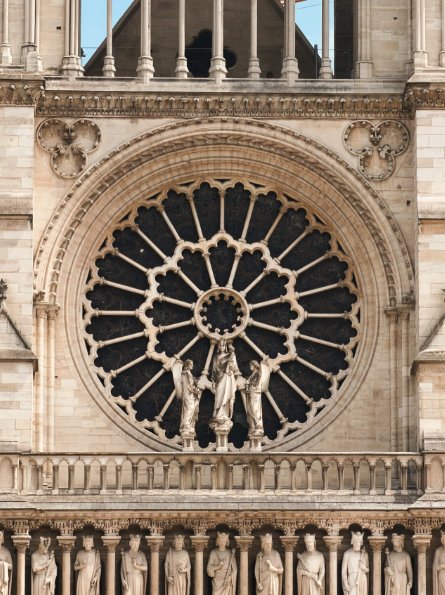
The Revolution was hard on Notre-Dame. In 1793 crowds beheaded the 28 statues of the Gallery of Kings, mistaking these biblical kings for kings of France, and the building was rededicated to the Cult of Reason. By the early 19th century it was shabby and its future uncertain.
A coronation and a novel
Two things restored the cathedral to the heart of French life. In 1804 Napoleon crowned himself Emperor inside its walls, and in 1831 Victor Hugo published Notre-Dame de Paris — The Hunchback of Notre-Dame — whose success turned public attention back to the neglected building and built support for its rescue.
The Viollet-le-Duc restoration
From 1844, the architects Viollet-le-Duc and Lassus spent two decades repairing and reimagining the cathedral. They recreated lost sculpture and added features now inseparable from it: the soaring lead-and-oak spire over the crossing and the brooding chimeras that watch over the city from the towers.
The 2019 fire and the rebuild
On 15 April 2019, fire broke out beneath the roof during restoration works, destroying the spire and the medieval oak roof frame and bringing down parts of the vault. The towers, walls and rose windows survived, and the Crown of Thorns was rescued. A five-year restoration — thousands of artisans, traditional oak carpentry, a spire rebuilt to Viollet-le-Duc's design — returned Notre-Dame to worship and visitors on 7–8 December 2024, with the Bell Towers reopening in September 2025.
Eight centuries, in dates
| Year | What happened |
|---|---|
| 1163 | Construction begins under Bishop Maurice de Sully |
| 1182 | The choir is consecrated and the high altar dedicated |
| c. 1250 | The west front and its towers are complete; the north rose is glazed |
| c. 1345 | Work on chapels and detailing finishes |
| 1793 | The Gallery of Kings is beheaded; the cathedral is rededicated to the Cult of Reason |
| 1804 | Napoleon crowns himself Emperor inside the cathedral |
| 1831 | Victor Hugo publishes Notre-Dame de Paris |
| 1844–1864 | Viollet-le-Duc and Lassus restore the building and raise a new spire |
| 1977 | Twenty-one heads from the Gallery of Kings are found beneath a Paris bank |
| 15 April 2019 | Fire destroys the spire and the medieval roof frame |
| 7–8 December 2024 | The cathedral reopens for worship and visitors |
| September 2025 | The Bell Towers reopen to climbers |
Why the 1793 damage still matters
The Revolution did more than deface statues. The lead was stripped, the treasury dispersed or melted, and the building spent years as a warehouse. That neglect is the reason the 1840s restoration was so extensive, and the reason so much of what visitors read as “medieval” is in fact 19th-century work carved in a medieval idiom. The Gallery of Kings on the west front is the clearest case: the figures you see are Viollet-le-Duc's, and the originals — or twenty-one of their heads — sit in the Musée de Cluny across the river.
This matters for a visit because it changes what you are looking at. Our page on the sculpture of Notre-Dame sets out which figures are medieval and which are 19th-century, and the architecture page does the same for the structure.
What burned, and what did not
- Lost: the 19th-century spire, the medieval oak roof frame known as “the forest,” and sections of the stone vault beneath it.
- Damaged: the great organ, choked with toxic lead dust; the interior stonework, coated in the same.
- Survived: the towers, the main walls, all three rose windows, the Virgin of Paris, and the Crown of Thorns, carried out by a chaplain and firefighters that night.
What survived because someone carried it out
The rescue of the Crown of Thorns on the night of 15 April 2019 is the detail most people remember, and it deserves the attention. A chaplain of the Paris fire brigade and a team of firefighters went into a burning cathedral for it, along with the tunic of Saint Louis and other treasury pieces. That was a decision made in minutes, under a roof that was already gone.
The other survivals were structural luck rather than choice. The three rose windows held. The towers held, though the north tower came close enough that the loss of the bells was a live possibility for part of the night. The Virgin of Paris stood in the crossing with vault debris around it. Our art and treasures page covers what the treasury holds today.
How the rebuild was done
The decision that shaped everything was to rebuild as it was: the spire to Viollet-le-Duc's design, the roof frame in oak, cut and joined by hand with medieval carpentry. Around a thousand oaks came from French forests, and the timber framing was assembled on the ground, taken apart and re-raised in place, the way it would have been in the 13th century. Stone was quarried to match, and the whole interior was cleaned rather than merely repaired — which is why the cathedral is paler now than at any point in living memory.
Some work continues. A set of contemporary stained-glass windows for the south nave chapels is planned toward the end of 2026, the first significant new commission since the reopening. The facts and figures page keeps the dates and dimensions in one place.
See how that history is written into the building in our guide to the architecture of Notre-Dame, and what to look for once you are inside in the interior highlights.
Ready to book a Notre-Dame tour?
Compare the guided tours and skip-the-line options side by side, from $24, all with free cancellation.
See all Notre-Dame toursTo stand in front of the restored facade with a guide who can read it, compare the Notre-Dame Cathedral Tours running now.
Tours that fit this trip
Chosen to match what this guide covers, not for what sells.
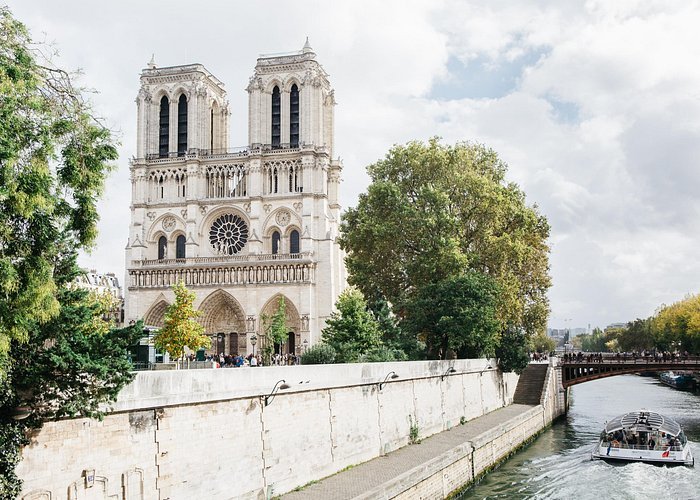
Private Historical Tour of Notre Dame
Eight centuries is a lot to carry in an hour; the art-historian private tour is the one format with room for the whole arc.
From $290 per person
Check Availability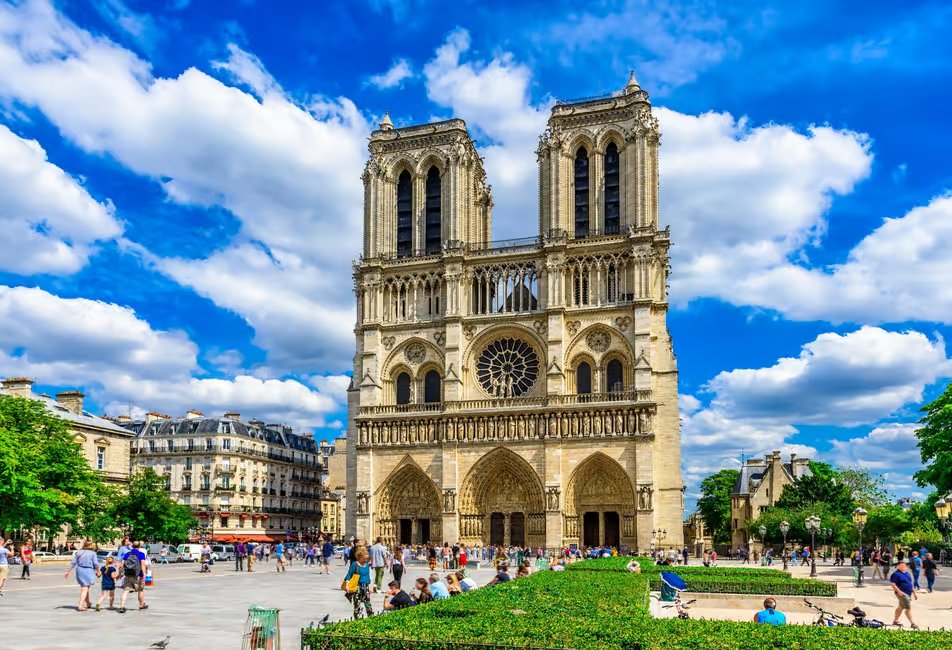
Paris: Notre-Dame Cathedral Interior and Exterior Guided Tour
The most-reviewed way to get the fire-and-restoration story told well, at the lowest guided price on the site.
From $24 per person
Check Availability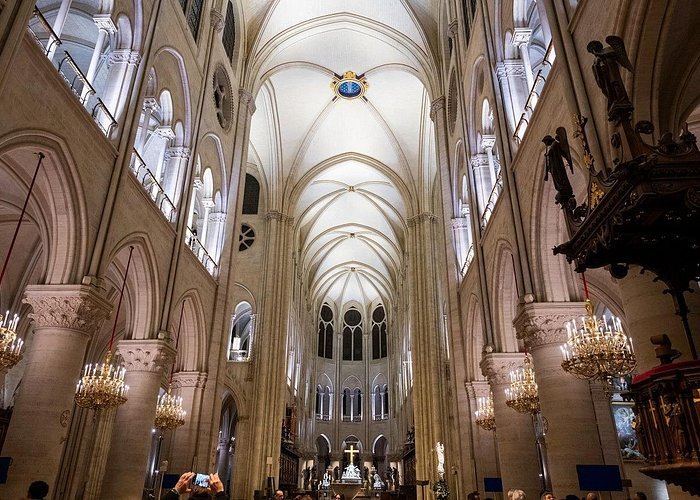
Paris: Notre-Dame Cathedral Interior & Ile de la Cite Guided Tour
A longer semi-private walk that puts the cathedral back into the island it grew out of — useful once you know the chronology.
From $124 per person
Check Availability