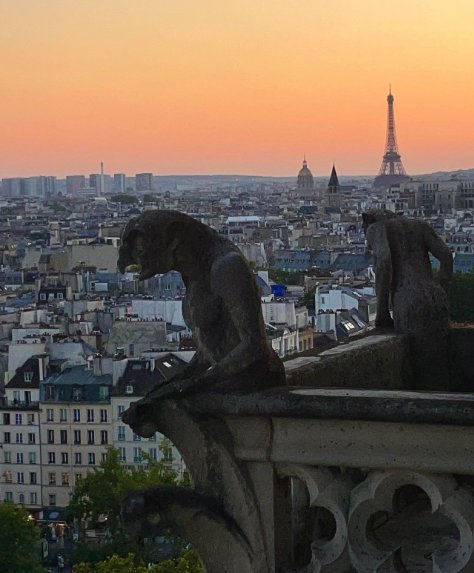
Twelve times the price for access to a building that costs nothing to enter. That spread is not arbitrary, and once you can see what each step buys, the right tier for your trip becomes obvious. Four variables do almost all the work.
In this guide
- The baseline is zero
- The four variables that set the price
- The tiers, priced out
- What does group size actually change?
- Guide credential, and why it costs
- What reserved access is worth
- The Sainte-Chapelle line item
- Is private worth four times group?
- What the $24 tier gives up
- The costs that are not in the price
- Where the value actually sits
- Picking your tier in one minute
The baseline is zero
Start here or nothing else makes sense. Entry to the nave of Notre-Dame is free, no ticket is sold for it, and the cathedral runs a free timed reservation on its own website that lets you past the general queue. Every price below is somebody charges on top of a building you can walk into for nothing.
That makes this an unusually clean commercial analysis. At the Louvre or Versailles a chunk of any tour price is the admission, and comparing tours means unpicking that first. Here, one hundred per cent of what you pay is service. Nobody is reselling you a door.
So the question is not “is this ticket good value” but “is this service worth sixty, ninety or two hundred and ninety dollars” — and that turns entirely on four things.
The four variables that set the price
Across the listings compared here, four variables explain almost the whole $24–$291 range. Everything else is noise.
- Group size. The strongest single driver. A guide leading five people earns the same as a guide leading twenty-five, so the per-head price moves roughly inversely with the cap.
- Guide credential. A licensed Paris guide costs more than a general escort, and an art historian costs more again. This is what separates the top of the range from the middle.
- Reserved access. Holding entry arrangements is operationally expensive, and listings that genuinely include it price fifteen to thirty dollars above ones that queue with the public.
- A second monument. Sainte-Chapelle admission is a real cost, around thirteen euro, plus the reserved slot on top. Every combo carries it.
Duration barely moves the needle, which surprises people. A two-hour island walk at $69 and a one-hour interior tour at $91 are priced by group cap and access, not by the clock.
The tiers, priced out
Five tiers cover the whole range. Prices are the listings’ own starting figures, per person.
| Tier | From | Group cap | Reserved access | What the step up buys |
|---|---|---|---|---|
| Entry guided | $24–$34 | 5–200 | Usually not | A licensed guide on the parvis; you enter through the free public line |
| Standard guided | $45–$70 | 20–25 | Sometimes | A scheduled entry arrangement and a more structured route |
| Access guided | $70–$91 | 7–20 | Usually yes | Held group entry, smaller cap, often headsets in the nave |
| Combo with Sainte-Chapelle | $77–$185 | 8–20 | Yes, at Sainte-Chapelle | A second monument and the queue that actually costs you time |
| Private and semi-private | $119–$291 | 1–9 | Varies | The guide’s full attention, your pace, and an expert rather than a generalist |
The single biggest jump is between rows one and three, and it is almost entirely the group cap plus the entry arrangement. Rows four and five add a monument and a credential respectively.
What does group size actually change?
More than any other variable, and it is published on nearly every listing, which makes it the most useful number on the page.
At a cap of five you can ask a question on the parvis and hear the answer. The guide can point at a specific figure on the Portal of the Last Judgement and everyone can see which one. At twenty-five you are on a headset, the guide is working from a script because they have to be audible over traffic, and questions get answered at the end if at all.
That is not a criticism of large groups. A headset tour on a windy forecourt is a reasonable way to deliver information to twenty-five people, and at $34 it is honest value. But it is a different product, and the price difference between it and a group of five is buying something specific.
Guide credential, and why it costs
France licenses its guide-lecturers, and a licensed guide has passed a real qualification. At the top of this range you are paying for something narrower still: the $291 private tour is led by a professional art historian, and the difference shows in what gets discussed.
The practical test is what a guide can do with the portals. Anyone can say the west front has three doorways. A licensed guide can tell you the Portal of Saint Anne reuses carving from an earlier building, that the Gallery of Kings above is Viollet-le-Duc’s nineteenth-century replacement after the 1793 beheadings, and that twenty-one of the original heads turned up under a bank in 1977. An art historian can then tell you why the recutting looks the way it does.
Whether that is worth two hundred dollars is a genuine question with different answers for different people. For a first visit, probably not. For someone who came to Paris for the Gothic, it is the best money in the range.
What reserved access is worth
Between fifteen and thirty dollars, judging by the price gap between otherwise comparable listings — and its actual value swings wildly with the month.
| Month | Typical walk-in wait | What reserved access saves | Worth paying for? |
|---|---|---|---|
| December–February | 5–15 min | Almost nothing | No |
| March, November | 10–25 min | A quarter of an hour | Marginal |
| April–June | 30–60 min | Most of an hour | Yes |
| July–August | 45 min – 2 hrs | Up to two hours, in the sun | Emphatically |
| September–October | 25–50 min | Half an hour or more | Yes |
Read that as a pricing table rather than a queueing one. The same twenty-dollar premium is poor value in January and the best value in the whole range in August, and nothing about the listing changes between those two months.
The Sainte-Chapelle line item
Every combo carries a real, checkable cost: admission to Sainte-Chapelle, around thirteen euro, plus the pre-reserved slot that lets you past the Palais de Justice security queue.
That queue is the thing. Notre-Dame’s line is outdoors on the parvis and moves; the Palais complex has a single bag check shared by Sainte-Chapelle and the Conciergerie, and in high summer it regularly runs past an hour. A combo at $77 against a $45 single-monument tour is roughly thirty dollars for a monument that costs fourteen and a queue that costs an hour.
At $185 for the semi-private version you are paying the same monument cost plus a cap of eight. Whether that is the right call depends on the same group-size logic that governs every tier here.
Is private worth four times group?
Honestly, for most readers, no. A private tour at $291 against a group tour at $70 buys three things: your own pace, unlimited questions, and a guide chosen for expertise rather than availability.
Those matter enormously to some people and not at all to others. If you have a handful of questions, a group of five gives you room for all of them at a quarter of the price. If you have forty, you need the private tour and you will feel it was cheap.
There is a middle option that gets overlooked: semi-private, capped at eight or nine, from $119. It preserves most of the conversation and costs less than half the private tier. For couples and families it is usually the better buy, and several listings offer it as an upgrade path within a single booking.
What the $24 tier gives up
Less than you would expect, and the exceptions are specific.
The cheapest guided listing compared here is $24, runs an hour, is led by a certified Parisian guide, and caps at five — which is a smaller group than tours costing three times as much. It is also the most-reviewed tour here, which is not an accident.
What it gives up is reserved access. You enter through the free public line with your guide, which is the right trade at eight in the morning in March and the wrong one at three in the afternoon in August. It also gives up length: an hour is a focused visit, not a leisurely one.
- Kept: a licensed guide, a genuinely small group, the parvis reading, and the interior visit.
- Given up: reserved entry, a longer route, headsets, and any second monument.
- Verdict: the best value on the page for anyone visiting outside high summer, and the wrong choice for a peak-August afternoon.
The costs that are not in the price
Four things sit outside every tour price here, and forgetting them is how a $70 morning becomes a $130 one.
| Item | Roughly | Included in any tour? |
|---|---|---|
| Bell Towers climb | €16 | No, and no operator can sell it — Centre des monuments nationaux only |
| Treasury | €12 | No; paid at the entrance inside |
| Archaeological Crypt | €9 | No; separate entrance and schedule |
| Transport to the island | €2–4 | Rarely; almost every listing excludes it |
The Bell Towers ticket is the one that catches people. It is online-only with no counter on site, so a traveller who planned to buy it on the day simply does not climb.
Where the value actually sits
Three observations from reading the whole range.
First, the bottom of the market is unusually good here. A $24 tour with a licensed guide and a cap of five would be a $60 product at most European monuments, and it exists because entry is free and the operator is selling only their time.
Second, the middle of the range is where the reserved-access premium sits, and it is seasonal value rather than permanent value. Buying it in February is buying nothing.
Third, the top of the range is priced on credential and attention, and it is honest about that. Nobody is pretending a $291 private tour gets you into a room the $24 tour cannot enter, because there is no such room.
Picking your tier in one minute
- Visiting November to March, want a guide: the $24–$34 tier. Reserved access buys nothing in those months.
- Visiting April to October, want a guide: the $70–$91 access tier. The queue premium pays for itself.
- Adding Sainte-Chapelle: a combo from $77. The pre-booked entry there is worth more than the one at the cathedral.
- Travelling as a couple or family who will ask questions: semi-private from $119, not private from $291.
- Here for the architecture specifically: the private art-historian tour. It is the one tier where the credential is the product.
- Not sure a guide is worth it at all: take the free reservation, go early, and read up. Entry costs nothing and always will.
Common questions
Why do Notre-Dame tours cost anything if entry is free?
What is the cheapest worthwhile Notre-Dame tour?
Is a private tour worth four times a group tour?
How much does reserved access add to the price?
Do any tours include the Bell Towers?
Does a longer tour cost more?
Where to go next
- Free reservation or guided tour? — the prior question, answered honestly
- Building the Île de la Cité half-day — whether the combo premium is worth it for your trip
- What travellers said — the operator ratings behind these tiers
- Every question travellers ask — what is and is not included, listing by listing
- Notre-Dame Cathedral tickets — live prices across the whole spread
Tours that fit this trip
Chosen to match what this guide covers, not for what sells.
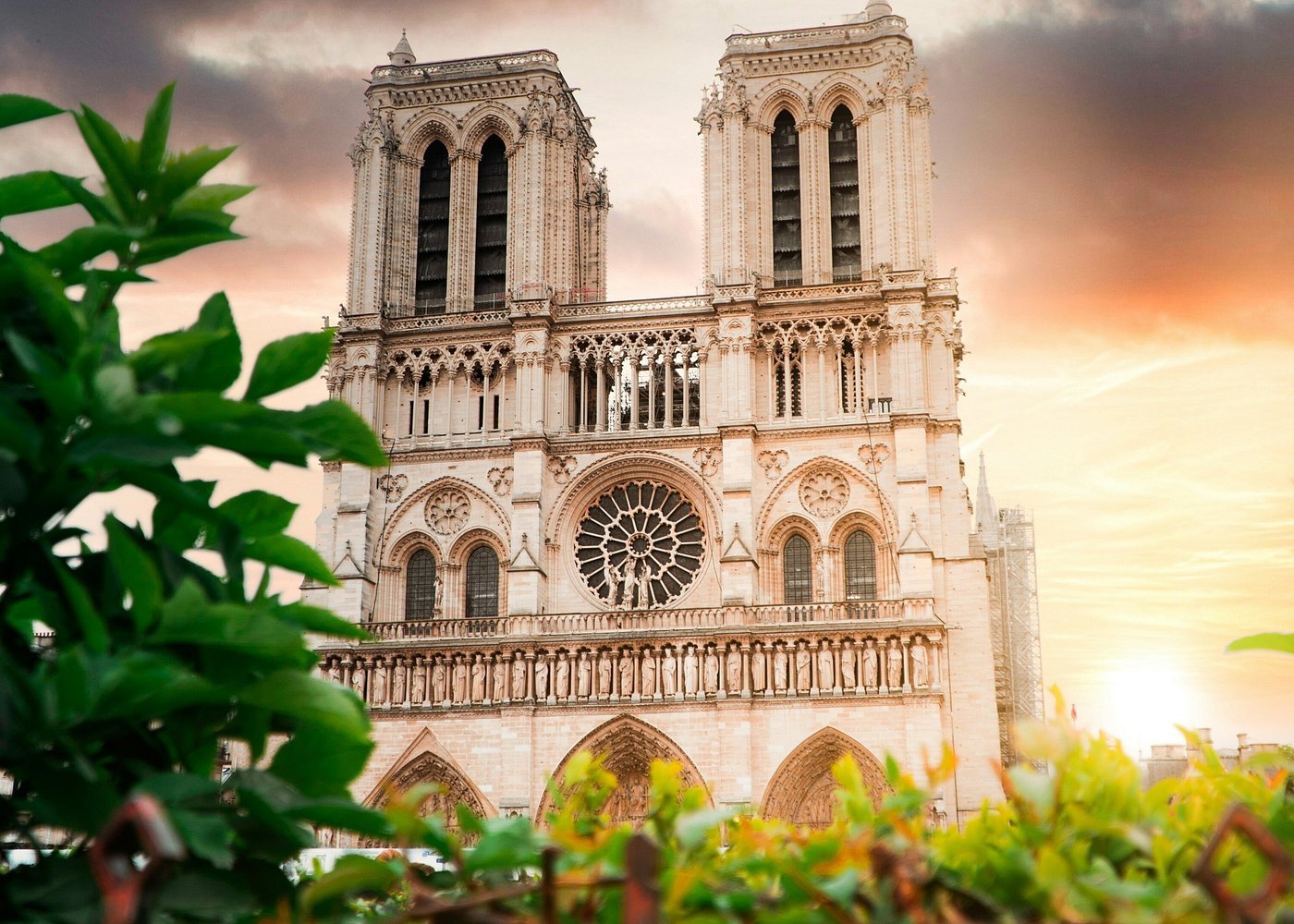
Paris Notre Dame Cathedral Guided Tour - Early Access
The bottom of the range done well: an early-access start, tiered options from self-guided upward, and a price that reflects a free building rather than a ticketed one.
From $26 per person
Check Availability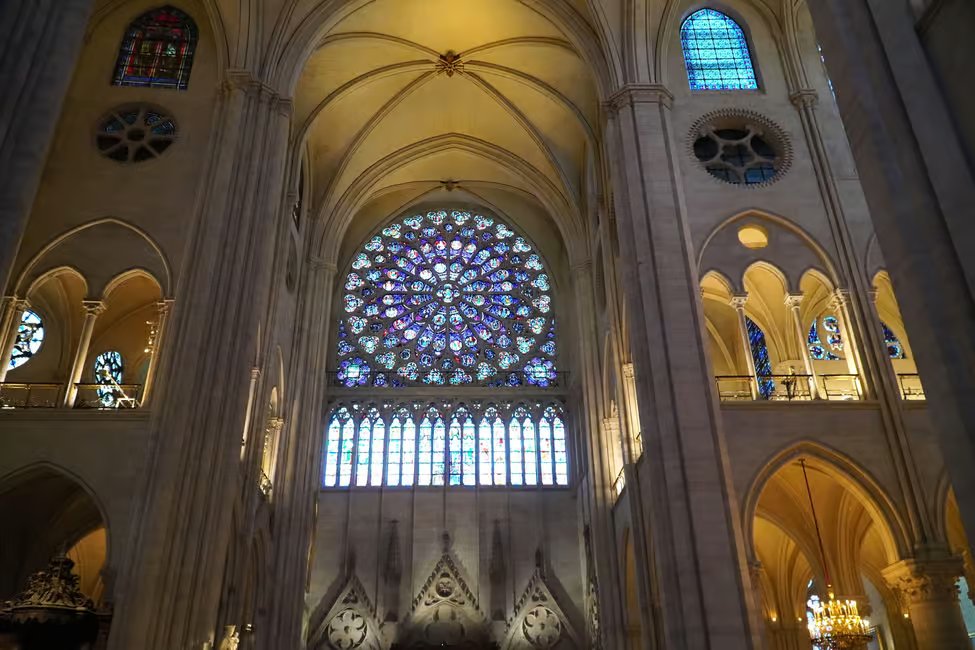
Paris Notre Dame Cathedral Guided Tour with Scheduled Access
The access tier, where the reserved-entry premium sits — a scheduled entry arrangement, a smaller cap and headsets that carry in a busy nave.
From $91 per person
Check Availability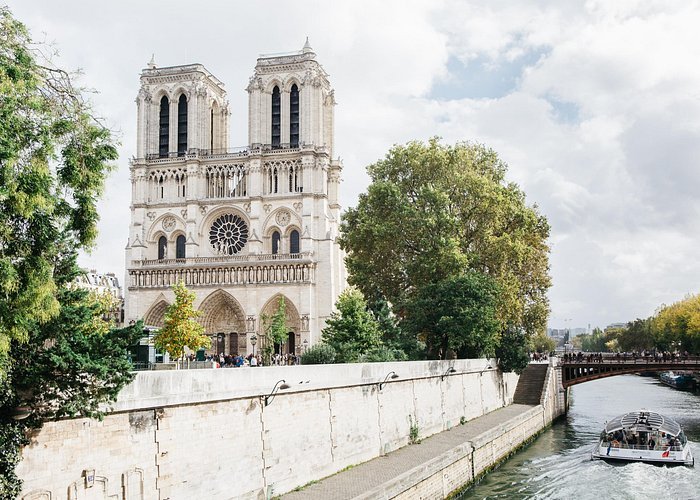
Private Historical Tour of Notre Dame
The top of the range, and honest about what it is: a private tour led by a professional art historian, priced on credential rather than on access.
From $290 per person
Check Availability