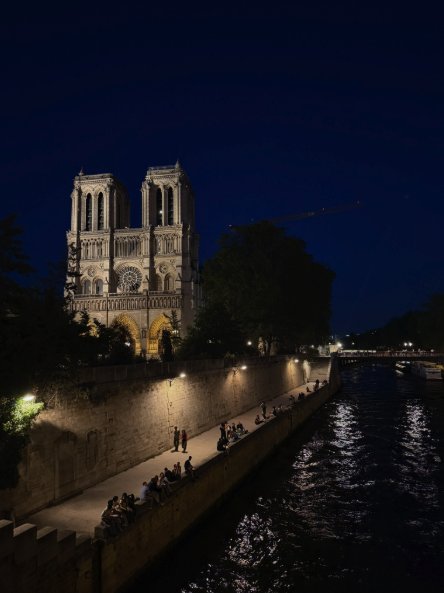
Most visitors meet the liturgical calendar at the door, when a service pauses tourist circulation and nobody warned them. It is not an obstacle so much as the building doing its actual job — and knowing the rhythm turns the worst dates into the best ones.
In this guide
- A working cathedral, not a museum
- The daily rhythm
- Which dates are the busy ones?
- The dated calendar ahead
- The Crown of Thorns Fridays
- The sacred-music season
- What happens to tourist access?
- The Thursday late opening
- How should you plan around it?
- Can you attend as a visitor?
- What operators do when a service closes the nave
- The dates worth travelling for
A working cathedral, not a museum
This is the fact that reorganises everything else. Notre-Dame de Paris is the seat of the Archbishop of Paris and an active place of worship, and it was reopened in December 2024 for worship first and visitors second. It has no closing day for renovation, no curator’s hang, and no obligation to the tourist timetable.
What that means in practice is that the calendar governing the building is the liturgical one, and it overrides the visiting hours without notice. A solemnity fills the nave. A funeral or a state commemoration can close it. And on any ordinary Tuesday, several services will pause tourist circulation for twenty or thirty minutes at a time.
None of that is a reason to stay away. It is a reason to know the rhythm, because the same dates that ruin a sightseeing visit make the best visit of your life if you came for the music.
The daily rhythm
Mass is celebrated every day, with several on Sundays and solemnities, and the divine office — Lauds, Vespers — is sung by the cathedral community. Around those, tourist circulation runs on the visitor route.
During a service the visitor route pauses or narrows, and stewards direct sightseers to the sides or hold them at the door. Worshippers may always enter through a dedicated line: attending is free, open to all, and requires nothing but quiet.
Which dates are the busy ones?
The great feasts, and they divide into two kinds: fixed dates that fall on the same day every year, and movable ones computed from Easter.
The fixed solemnities that matter most here are Christmas on 25 December, the Assumption of the Virgin on 15 August, All Saints on 1 November, the Immaculate Conception on 8 December and Epiphany on 6 January. The Assumption carries extra weight at a cathedral dedicated to Our Lady — the name Notre-Dame means exactly that.
The movable ones run off Easter: Good Friday two days before, Easter Sunday itself, and Pentecost forty-nine days after. Easter falls on 28 March in 2027, which puts Good Friday on 26 March and Pentecost on 16 May.
Add one date that is not liturgical at all: 7–8 December, the anniversary of the reopening, which now carries commemorative liturgy of its own.
The dated calendar ahead
Fixed solemnities and the movable feasts computed from Easter. The cathedral publishes exact service times season by season, so confirm the hour on the official Notre-Dame de Paris website before planning a day around any of them.
| Date | Occasion | What it means for a visit |
|---|---|---|
| 1 November 2026 | All Saints | A solemnity; additional Masses and heavier attendance |
| 7 December 2026 | Second anniversary of the reopening | Commemorative liturgy and crowds |
| 8 December 2026 | Immaculate Conception | A Marian solemnity, significant at a cathedral of Our Lady |
| 25 December 2026 | Christmas Day | The busiest liturgical day of the year; access prioritised for worshippers |
| 6 January 2027 | Epiphany | Solemn Mass; tourist circulation pauses during the liturgy |
| 26 March 2027 | Good Friday | Traditionally a day for veneration of the Crown of Thorns |
| 28 March 2027 | Easter Sunday | Several Masses; among the heaviest days of the year |
| 16 May 2027 | Pentecost | A solemnity with additional Masses |
| 15 August 2027 | Assumption of the Virgin | The patronal feast; a procession day in Paris |
Nine dates across a year, which is fewer than most visitors fear. Ninety-five per cent of the calendar is ordinary time.
The Crown of Thorns Fridays
The cathedral’s most venerated relic is brought out for public veneration on set days through the year — customarily the first Friday of each month, the Fridays of Lent, and Good Friday. Arrangements have evolved since the reopening, so the current dates are worth confirming rather than assuming.
These are solemn occasions and not tourist events. If you attend, attend properly: the queue is for veneration, the atmosphere is devotional, and photography during it is inappropriate whatever the general rules say.
The relic was famously carried out of the burning cathedral on the night of 15 April 2019 by a fire-brigade chaplain and firefighters, along with the tunic of Saint Louis. It is otherwise kept in the Treasury, which is a separate ticket of around twelve euro paid at the entrance inside.
The sacred-music season
Notre-Dame’s musical tradition runs through its maîtrise, the cathedral choir school, one of the oldest musical institutions in France. Alongside the daily liturgy there is a programme of choral concerts and organ recitals, announced season by season and ticketed separately from cathedral entry.
The great organ is the draw. Rebuilt in the nineteenth century by Aristide Cavaillé-Coll, it has roughly eight thousand pipes across five manuals, and it survived the fire only to be choked with toxic lead dust — every pipe was removed, cleaned and re-tuned by hand before the reopening.
Hearing it in the nave it was built for is, for a certain kind of visitor, the whole reason to come. It also happens for free during services, which is the cheapest great musical experience in Paris.
What happens to tourist access?
Three levels, in ascending order of disruption.
- A routine service. The visitor route narrows and stewards hold or redirect sightseers. Twenty to thirty minutes, and you can usually still see most of the interior from the aisles.
- A solemnity. Access is prioritised for worshippers, the nave fills, and sightseeing is effectively suspended for the duration. Christmas and Easter are the clearest cases.
- A state occasion or funeral. The cathedral closes to visitors entirely, sometimes at short notice. Rare, but it happens — the building remains a stage for national life.
In all three cases the response is the same: come back later in the day, or come the next morning. Nothing about this is refundable at the cathedral, because you never paid to get in.
The Thursday late opening
One genuinely useful piece of the schedule: on Thursdays the cathedral stays open until 10 PM, against 7 PM on other weekdays and 7:30 PM at weekends.
That makes a Thursday evening the quietest reliable window of the week. The daytime crowds have gone, the queue has cleared, and the interior at nine at night is as close to empty as Notre-Dame gets in season. It is also the one slot where you can have both a calm interior and the floodlit facade in the same visit.
Last entry is thirty minutes before closing on every day, Thursday included, so aim to be at the door by half past nine at the latest.
How should you plan around it?
Four rules cover it.
- Avoid Sunday morning for sightseeing. Several Masses, the heaviest congregation of the week, and the narrowest visitor route.
- Check the nine dates. If your trip crosses a solemnity, plan the cathedral for a different day and go to the feast for the music instead.
- Take a weekday morning as the default. Tuesday to Thursday, first hour after opening, is the smoothest sightseeing there is here.
- Keep the day flexible. Every guided tour compared here refunds in full to 24 hours before, which is exactly the right instrument for a building that reserves the right to change its own schedule.
Can you attend as a visitor?
Yes, and nobody will ask why you are there. Mass and the offices are free and open to all, and worshippers enter through a dedicated line rather than the visitor queue.
What is expected is straightforward: arrive before it starts rather than during, sit rather than wander, keep the camera away, and stay to the end or leave between rather than mid-liturgy. Shoulders covered and knees covered applies here as everywhere in the building, and security enforces it.
The reward is disproportionate. The organ at full stretch under those vaults is not a thing a guided tour can sell you, and it costs nothing.
What operators do when a service closes the nave
Reputable operators schedule around the liturgy where they can and adjust when they cannot. In practice that means the parvis portion runs as normal — and since spoken guiding is restricted inside anyway, that is where most of the content lives — and the interior visit is moved, shortened or refunded.
Some listings state this explicitly, along the lines of “the visit may be modified or cancelled without notice for religious services, with a full refund.” That is an honest listing and the wording is a mark in its favour.
What no operator can do is override the cathedral. If a state commemoration closes the building on your date, no price tier gets you in, and the free-cancellation window is the only real protection anyone has.
The dates worth travelling for
Turn the whole thing around and the calendar becomes an opportunity rather than a hazard.
Christmas. The busiest day of the year and the most atmospheric, with midnight celebrations. Terrible for sightseeing, unforgettable for anything else.
The Assumption, 15 August. The patronal feast of a cathedral named for Our Lady, and a procession day in Paris. High summer, so pair it with an early morning elsewhere.
A first-Friday veneration. Quieter than the great feasts and the most direct encounter with the relic the building was partly rebuilt around.
Any Thursday evening. Not liturgical at all, just the best-kept piece of the opening hours — open until 10 PM, and quiet from about eight.
Common questions
Does Notre-Dame close for services?
Which dates should I avoid for sightseeing?
Can I attend Mass as a tourist?
When can I see the Crown of Thorns?
Are there concerts at Notre-Dame?
What happens to my tour if a service closes the nave?
Where to go next
- The island in ninety minutes — the route to run on a clear morning
- Services, feast days and concerts — the calendar page, with the dated table
- The Crown of Thorns and the Treasury — what the veneration Fridays bring out
- Hour, day and season — the non-liturgical side of timing
- Notre-Dame Cathedral Tours — which departures run around the services
Tours that fit this trip
Chosen to match what this guide covers, not for what sells.
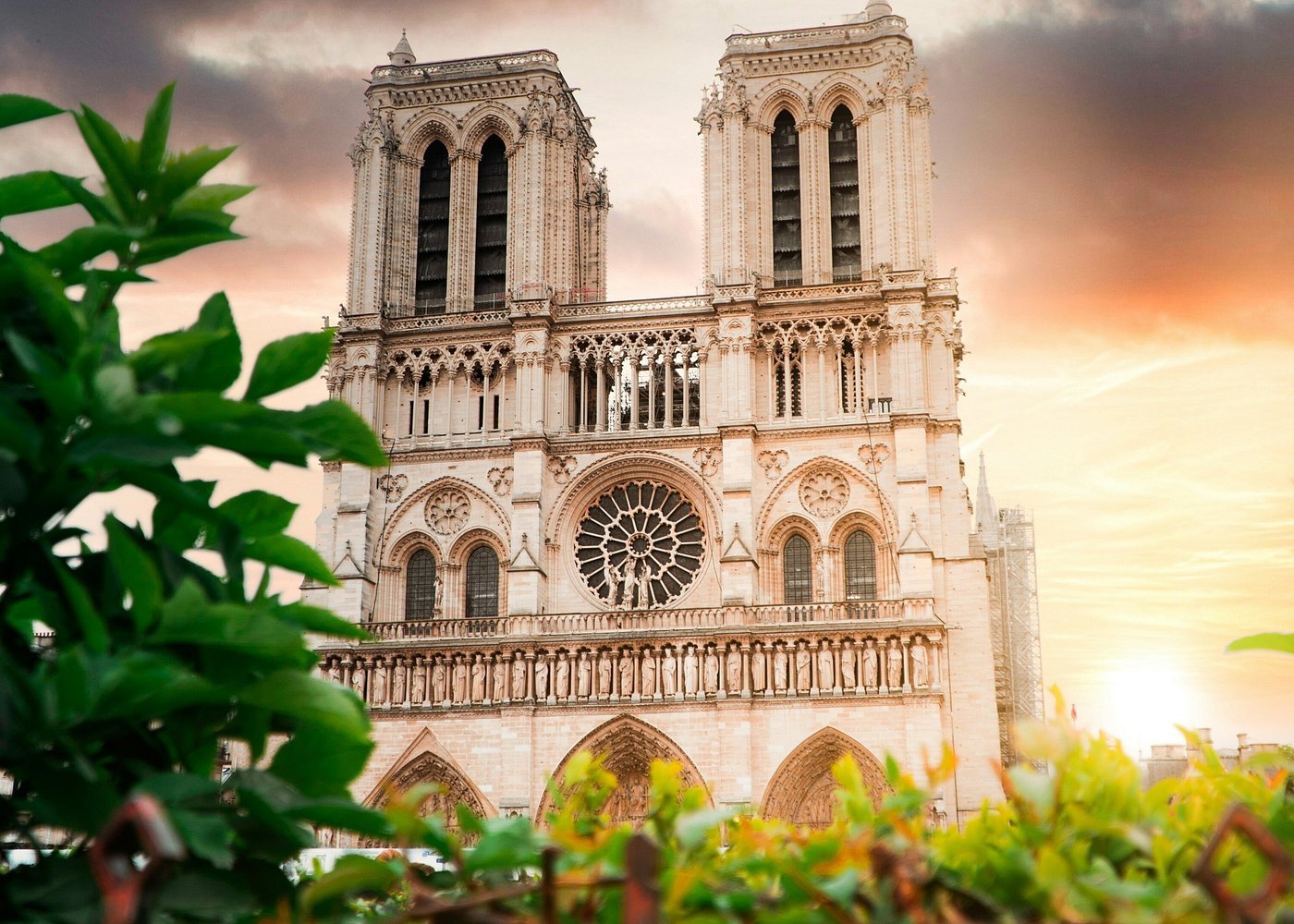
Paris Notre Dame Cathedral Guided Tour - Early Access
The early-access format, which is the reliable answer on a feast-day week — you are through the cathedral before the congregation arrives.
From $26 per person
Check Availability
Notre-Dame Cathedral Guided Tour with Flexible Options
Three formats in one booking, so a group that has to move its date around a solemnity can change shape rather than start again.
From $33 per person
Check Availability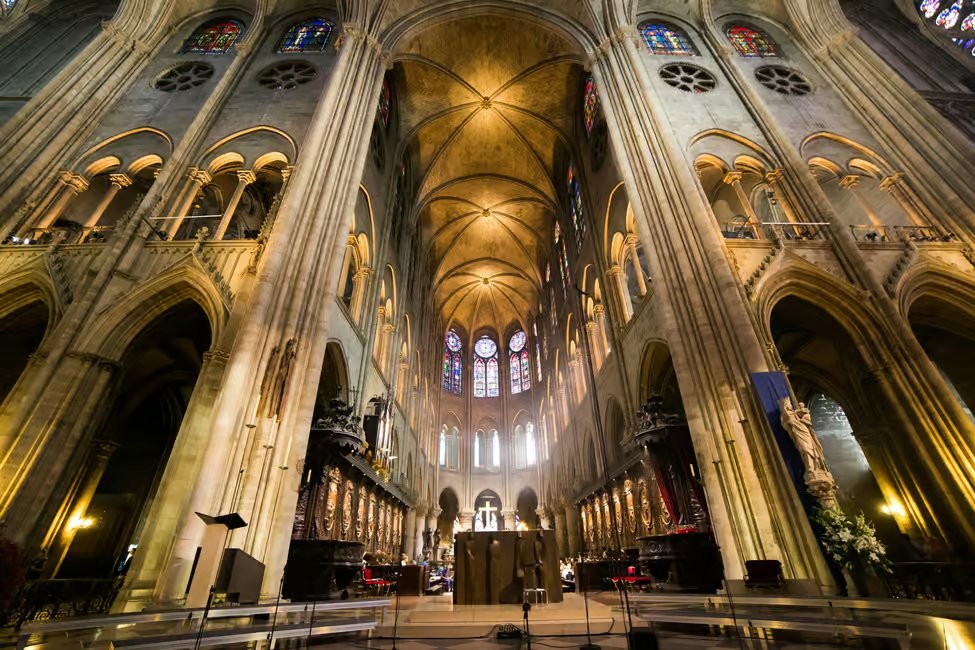
Paris: Notre-Dame Cathedral Guided Tour with Access
A one-hour visit with access, short enough to slot between the morning offices and the midday crowd on a busy liturgical day.
From $50 per person
Check Availability