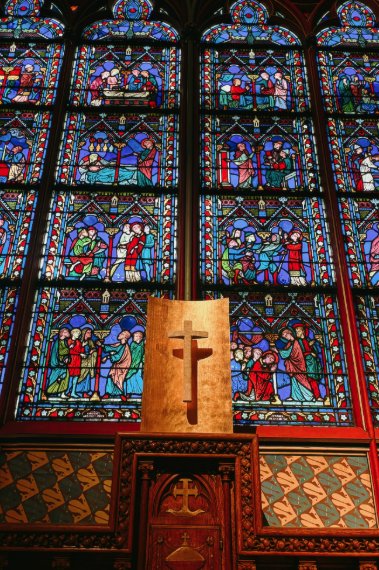
The island is walkable in fifteen minutes end to end, which is exactly why people get the order wrong. This is a timed route — nine stops, ninety minutes, no tickets required — built around where the queues form and where the light falls.
In this guide
- The shape of the island
- When should you start?
- The route, stop by stop
- The ninety minutes, timed
- Stop 1–3: Pont Neuf to the parvis
- Stop 4–5: the facade and the nave
- Stop 6–7: the chevet and the square behind
- Stop 8–9: the flower market and the western tip
- Three variants for a different day
- Where are the photographs?
- Where to eat without losing the morning
- What to do if you have three hours
The shape of the island
The Île de la Cité is a boat-shaped sandbank about a kilometre long, and everything on it is arranged along one axis. The western tip is the quiet end — Pont Neuf, the Square du Vert-Galant, the tree at the point. The middle is administrative: the Palais de Justice, the Conciergerie, Sainte-Chapelle. The eastern third is the cathedral and the gardens behind it.
Almost every visitor arrives at the middle, from the Cité metro station on Line 4, and walks east. That is the single most crowded approach on the island and it puts you at the busiest face of the cathedral at the busiest moment. Arriving from either tip instead changes the morning completely.
The route below runs west to east, which means you finish at the cathedral with the sun behind you and the flower market on the way. It also means you walk against the flow for the first twenty minutes, which is more pleasant than it sounds.
When should you start?
Eight in the morning on a weekday, or a Thursday evening. Those are the two windows where the island belongs to the people who live on it rather than to the people photographing it.
The cathedral opens at 7:50 AM Monday to Friday and 8:15 AM at weekends, and the first hour after opening is consistently the quietest and the coolest. By ten the parvis has filled; by two in the afternoon the queue is at its longest. On Thursdays the cathedral stays open until 10 PM, and a nine o’clock evening walk across the island is one of the best hours available in central Paris.
The route, stop by stop
Nine stops, all of them free, none of them requiring a ticket or a reservation. Total walking distance is a shade under two kilometres.
- 1. Pont Neuf. The oldest standing bridge in Paris, finished in 1607, and the only one built without houses on it. Start on the Right Bank side and walk onto the island.
- 2. Square du Vert-Galant. Down the steps at the western tip. A pointed garden at water level, usually empty at eight in the morning.
- 3. Place Dauphine. Back up and east into a triangular seventeenth-century square that most visitors never notice, despite it being forty metres from the bridge.
- 4. Quai des Orfèvres or Quai de l’Horloge. Either side works. The north quay gives you the Conciergerie’s towers and the oldest public clock in Paris.
- 5. The flower market. Officially the Marché aux Fleurs Reine Elizabeth II, under iron pavilions, open daily.
- 6. The parvis. The forecourt of Notre-Dame, and the Point Zéro marker from which all French road distances are measured.
- 7. Inside the cathedral. Forty minutes, free, through the visitor entrance.
- 8. Square Jean XXIII. The garden behind the chevet, which is where the flying buttresses are actually visible.
- 9. Pont de l’Archevêché. The bridge off the eastern end, and the classic view back at the apse and the spire.
The ninety minutes, timed
Assumes an 8:00 AM start on a weekday and no reservation, which at that hour you do not need.
| Time | Where | Minutes | Why here, now |
|---|---|---|---|
| 8:00 | Pont Neuf and the Vert-Galant | 12 | Empty; the river light is at its best |
| 8:12 | Place Dauphine | 6 | Quiet square, and it wakes up slowly |
| 8:18 | Quai de l’Horloge past the Conciergerie | 8 | The medieval towers from outside, free |
| 8:26 | Marché aux Fleurs | 9 | Traders setting up; the pavilions are the point |
| 8:35 | The parvis and the portals | 15 | Read the three portals before you go in |
| 8:50 | Inside the cathedral | 40 | Shortest queue of the day; nave, roses, organ |
| 9:30 | Square Jean XXIII | 12 | The buttresses from behind, in morning light |
| 9:42 | Pont de l’Archevêché | 8 | The view back; then off the island |
Ninety minutes exactly, with the cathedral getting forty of them. Start at ten instead and the same route takes closer to two and a half hours, almost all of the difference spent standing in the entry line.
Stop 1–3: Pont Neuf to the parvis
Pont Neuf is a good place to start because it explains the island. Standing at the middle of it you have the Louvre on one bank, the Latin Quarter on the other, and the point of the Île de la Cité below you. Paris grew outward from where you are standing.
The Square du Vert-Galant is down a staircase at the tip, and it is the only place on the island where you are at river level with water on three sides. At eight in the morning there is usually nobody there. By midday it is a picnic ground.
Place Dauphine is the surprise of the route. Louis XIII laid it out in 1607 as a matching pair with the Place des Vosges, and it survives as a shaded triangle of brick and stone with a handful of restaurants. Most island visitors walk past its entrance without registering that it exists.
Stop 4–5: the facade and the nave
Give the parvis fifteen minutes before you go in. The three west portals each tell a different story, the Gallery of Kings runs above them, and knowing which figures are medieval and which are nineteenth-century recuttings changes what you are looking at. That reading is most of what a guided tour gives you, because spoken guiding is restricted inside.
Inside, forty minutes is enough for the nave, the three rose windows, the great organ on the west wall behind you, and a circuit of the ambulatory. Look up before you move, and turn around once you are ten metres in — the west rose and the organ are behind almost every visitor for their entire visit.
The stone is startling if you last saw the interior before 2019. Centuries of soot came off in the cleaning, and the limestone underneath is far paler than anything in living memory. Give your eyes ten minutes to adjust before deciding what you think of it.
Stop 6–7: the chevet and the square behind
Square Jean XXIII, the garden east of the cathedral, is the stop most itineraries drop and the one that does the most work. From the parvis you cannot see the flying buttresses at all; from the garden they fan out around the apse in the arrangement that made the whole building possible.
It is also the best place on the island to explain the fire. The spire that burned stood over the crossing, roughly above the point where the transepts meet, and from the garden you can see how the rebuilt flèche sits in relation to the roof line. The new oak frame beneath it was cut and joined by hand.
Fifteen minutes here is worth more than a second circuit inside, and there is almost never a crowd.
Stop 8–9: the flower market and the western tip
If you run the route in reverse — east to west, finishing at Pont Neuf — the flower market comes at the end and it works better as a finish than a middle. The pavilions date from 1808, the market runs daily, and it is one of the last of its kind in the city.
The Pont de l’Archevêché at the eastern end gives you the postcard: the apse, the buttresses and the spire in one frame from across the water. It is a short bridge and it gets busy from mid-morning, so if you want that photograph without twenty people in it, it belongs at the start of your morning rather than the end.
Three variants for a different day
The rainy version
Cut stops 1, 2 and 8. Start at the Cité metro, go straight into the cathedral, then across to Sainte-Chapelle, which is indoors and better in flat light than most people expect. Sixty minutes, almost all of it under a roof.
The evening version
Thursday only. Start at seven at Pont de l’Archevêché, walk west with the facade lighting up as you go, and be inside the cathedral by eight. The nave at nine on a Thursday evening is as quiet as it gets.
The version with children
Reverse it and shorten it. Start at Square Jean XXIII, where there is space to run, do thirty minutes inside the cathedral, then the flower market, then ice cream on the Île Saint-Louis over the footbridge. Sixty minutes, one queue, one reward at the end.
Where are the photographs?
Four spots do most of the work, and only one of them is on the parvis.
- Pont de l’Archevêché: the apse, buttresses and spire together. Morning light, and the bridge is short so get there early.
- Square Jean XXIII: the buttresses close up, framed by trees. Works at any hour.
- Quai de Montebello, Left Bank: the classic side-on view across the water, best in late afternoon.
- The parvis at dusk: the west front floodlit. This is the shot everyone wants and the only one that needs the evening rather than the morning.
Photography inside is permitted for personal use without flash. Tripods are not allowed, and you should put the camera down during a service.
Where to eat without losing the morning
The island is not where you eat. The restaurants immediately around the parvis are priced for people who are not coming back, and stopping there converts a ninety-minute walk into a three-hour one.
Two better options are both a bridge away. Cross the Pont Saint-Louis to the Île Saint-Louis for a bakery and an ice cream, which takes ten minutes and is genuinely worth the detour. Or cross to the Left Bank at Quai de Montebello and you are in the Latin Quarter within three minutes, with everything from a counter sandwich to a long lunch.
Place Dauphine is the exception on the island itself — a handful of small restaurants under the trees, and far calmer than anything near the cathedral.
What to do if you have three hours
Add the two ticketed monuments and nothing else. Sainte-Chapelle’s upper chapel takes thirty to forty minutes including the staircase, and the Conciergerie takes forty-five. Both sit behind the same security check, which is the slow part of the island, so buy a joint ticket and a timed slot before you arrive.
Do not try to add the Bell Towers to a three-hour window. The 422-step climb is a separate ticket from the Centre des monuments nationaux, booked online with no counter on site, and with the timed-entry wait it takes ninety minutes to two hours on its own.
What not to add: a second cathedral visit, a river cruise, or a museum. The island rewards depth rather than volume, and three hours spread across three monuments beats three hours spread across six.
Common questions
How long does the Île de la Cité take to walk?
Which metro station is best for this route?
Do I need to book anything for this walk?
Is the route step-free?
What is the best time of day for photographs?
Can I do this route in the evening?
Where to go next
- Building the Île de la Cité half-day — whether to add Sainte-Chapelle or the Conciergerie at all
- The liturgical year — the dates that close the route without warning
- Inside the cathedral — what to look at during those forty minutes
- The island in photographs — the facade, the buttresses and the roses
- Notre-Dame Cathedral Tours — every listing, with live prices and what each one covers
Tours that fit this trip
Chosen to match what this guide covers, not for what sells.
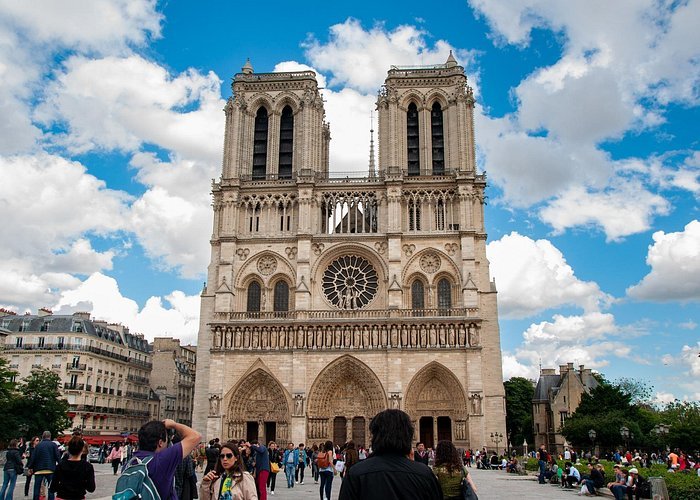
The Ultimate Notre-Dame Cathedral & Ile de la Cite Walking Tour
This route, guided: two hours across the island taking in Square Jean XXIII, the Seine quays and the medieval street plan before the cathedral itself.
From $68 per person
Check Availability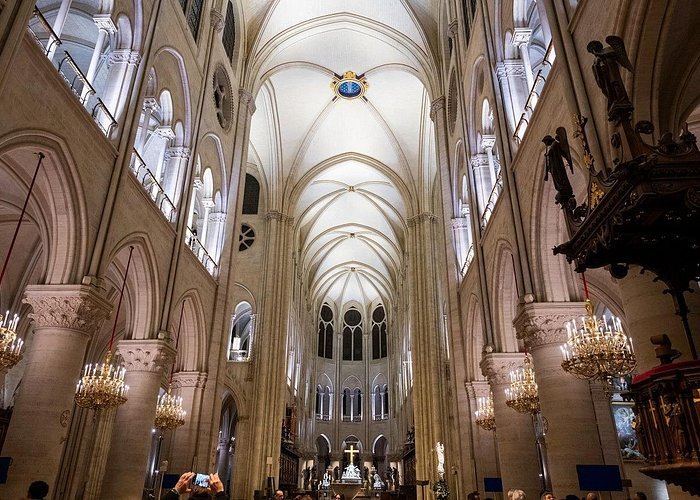
Paris: Notre-Dame Cathedral Interior & Ile de la Cite Guided Tour
A longer semi-private version of the same island walk, capped small, for readers who want the route unhurried and room to ask questions at every stop.
From $124 per person
Check Availability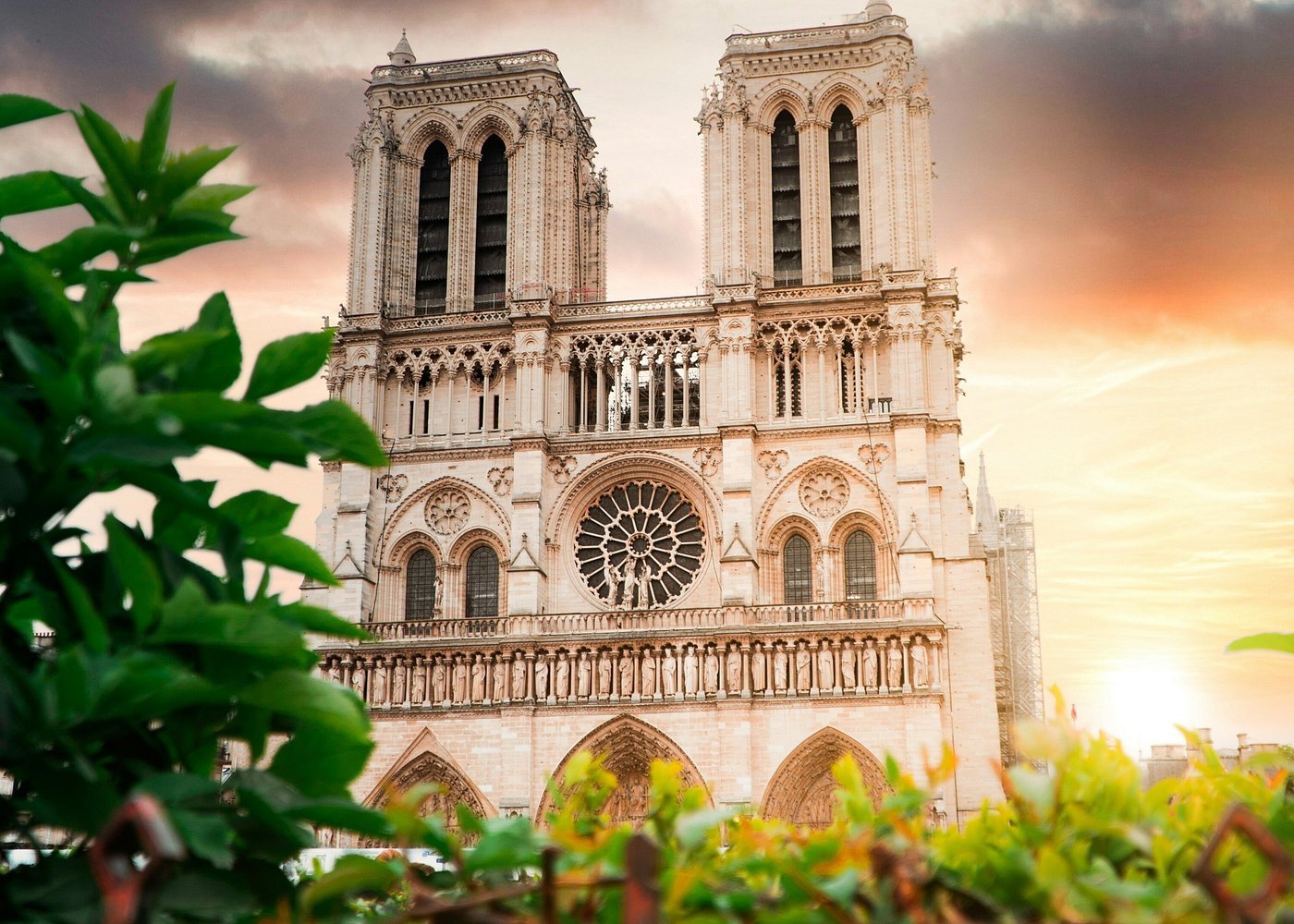
Paris Notre Dame Cathedral Guided Tour - Early Access
The early-access option, for the eight o’clock start this route is built around — you are on the parvis before the day’s crowds arrive.
From $26 per person
Check Availability